


Lab-Grown vs. Natural Diamond Engagement Rings: Which Is Worth It in 2026?

- What Is a Lab-Grown Diamond?
- Lab-Grown Diamond vs. Natural Diamond: What's Actually Different?
- Why Lab-Grown Diamonds Make Sense for Engagement Rings in 2026
- How to Choose Your Engagement Ring Cut
- Solid White Gold vs. Platinum: Which Metal for an Engagement Ring?
- Shop GLD Lab-Grown Diamond Engagement Rings
- Frequently Asked Questions
Proposals are some of the most memorable moments in life. A lot of the meticulous planning for them is centered around the actual engagement ring, so choosing the right one sets the tone for years to come. Natural diamonds used to be the go-to for engagement rings, but in 2026, lab-grown diamonds have gone from a niche alternative to the mainstream choice. To avoid any confusion and help you make the best decision between lab-grown and natural diamonds, this article explains what lab-grown diamonds actually are, how they compare to natural diamonds, the difference between cuts, and how to find the right ring. You only get one shot at this moment, so let’s make sure you know everything you need before making this lasting decision.

What Is a Lab-Grown Diamond?
A lab-grown diamond, although it’s sometimes referred to as an artificial or synthetic diamond, is a real diamond. They are chemically identical to natural diamonds, with the only difference being their origin and price. Their quality, hardness, and grading are indistinguishable from natural diamonds.
Lab-grown diamonds have the same composition as a natural diamond, pure carbon arranged in a crystalline structure, and are graded by the same gemological standards, scoring a 10 out of 10 on the Mohs scale of hardness. They are created within weeks in a laboratory, through a process that replicates the conditions under which natural diamonds form. So when you consider the billions of years for natural formation, the environmental concerns, and physical hazards of mining, lab-grown diamonds are an attractive alternative for many people.
For a full breakdown of all stones, including diamonds, moissanite, and CZ, check out the full stone guide by our founder, Christian Johnston, below.
Lab-Grown Diamond vs. Natural Diamond: What's Actually Different?
Natural diamonds form under extreme heat deep within the earth’s mantle over billions of years. They’re extracted through mining, which can cause long-term health issues for workers and creates hazardous risks for surrounding communities. That origin is the main difference between natural and lab-grown diamonds, followed by their price. Structurally, they are identical and have the same quality and hardness.
It’s also worth noting that the modern perception and popularity of natural diamonds was a marketing-driven cultural shift in 1947. The De Beers "A Diamond Is Forever" campaign was what created the modern assumption that an engagement ring should be a natural diamond. Before that campaign, natural diamonds weren’t the typical engagement stone for women's fine rings. Here’s a chart that breaks down the key differences between natural and lab-grown diamonds.
|
Factor |
Lab-grown diamond |
Natural diamond |
|
Chemical composition |
Pure carbon arranged in a crystalline structure. Identical to a natural diamond. |
Pure carbon arranged in a crystalline structure. Identical to a lab-grown diamond. |
|
Origin |
Grown in a controlled laboratory environment in weeks |
Formed in the earth over billions of years, extracted through mining |
|
Grading |
Graded by the same gemological standards of cut, color, clarity, carat |
Graded by the same gemological standards of cut, color, clarity, carat |
|
Hardness |
10/10 on the Mohs scale, the hardest natural material on Earth |
10/10 on the Mohs scale, the hardest natural material on Earth |
|
Price |
Typically 50 to 80% less expensive than a natural diamond of the same quality |
Significantly more expensive as price is driven by rarity and mining costs |
|
Environmental footprint |
No mining required and a significantly lower environmental impact |
Requires mining, higher land, water, and community impact |
Why Lab-Grown Diamonds Make Sense for Engagement Rings in 2026
Between the price, grading, and cut availability, it's easy to see why lab-grown diamonds make more sense than natural ones. Natural diamonds are typically 50 to 80% more expensive than lab-grown diamonds, which means you can get way more for your budget without compromising quality. By the same token, they’re both graded by the same gemological standards of cut, color, clarity, and carat. In practical terms, a VVS natural diamond and a VVS lab-grown diamond are the same. Also, lab-grown diamonds aren’t restricted by what nature produces. GLD’s lab-grown diamond engagement ring collection features eight different cuts.
How to Choose Your Engagement Ring Cut
The cut of the engagement ring directly reflects your partner's personal style, and choosing the right one comes down to understanding what the different cuts are and how they look. Here’s a quick breakdown of each one:
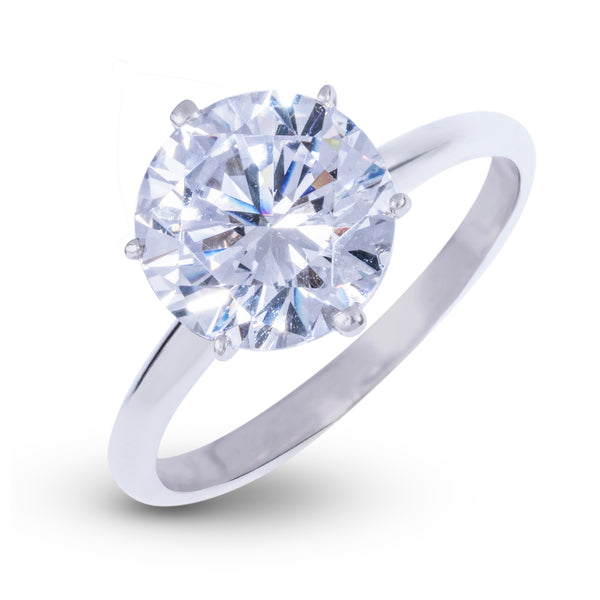
Round: The most classic engagement ring cut is round. Round diamonds are unique because they are mathematically engineered to maximize brilliance. GLD’s Round Single Stone Lab Diamond Engagement Ring in Solid White Gold starts from $2,500.
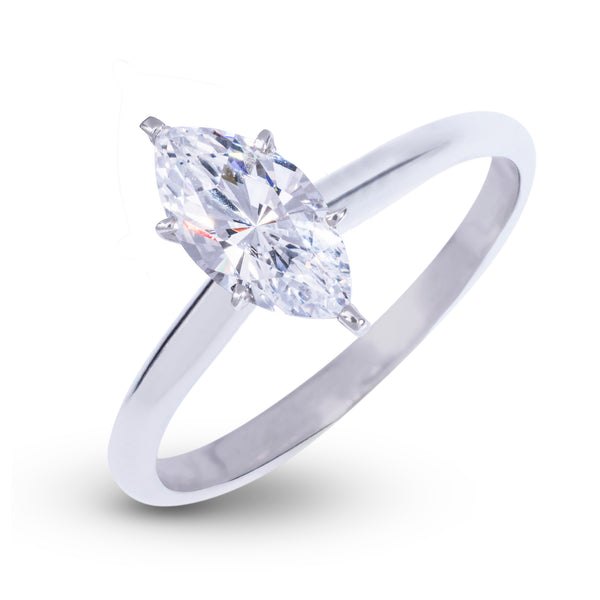
Marquise: Marquise diamonds are known for their football-like, elongated oval shape. Their elegant silhouette is unique because it creates the illusion of a larger diamond for its carat weight. Our Marquise Single Stone Lab Diamond Engagement Ring in Solid White Gold starts from $2,500.
Radiant: Radiant cut diamonds feature a rectangular cut that combines the clean lines of an emerald cut with the fiery brilliance of a round-cut diamond. The Radiant Single Stone Lab Diamond Engagement Ring in Solid White Gold starts from $2,500.
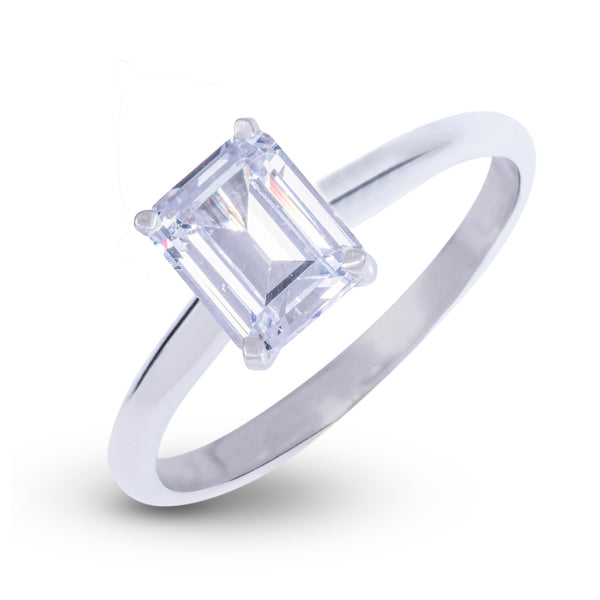
Emerald: Emerald cut diamonds are rectangular step-cut diamonds known for their cropped corners. This creates a “hall of mirrors” optical effect that prioritizes clarity over brilliance. The GLD Emerald Single Stone Lab Diamond Engagement Ring in Solid White Gold starts from $2,500.
Teardrop: A teardrop diamond combines the intense brilliance of a round cut with the elongated elegance of a marquise in the shape of a pear. It’s one of the most recognizable silhouettes of engagement rings, and the Teardrop Single Stone Lab Diamond Engagement Ring in Solid White Gold starts from $2,500.
Princess: Princess cut diamonds are highly popular, square-shaped stones with sharp corners. It’s the most popular square-cut engagement ring stone, which blends the clean lines of a square shape with the intense brilliance of a round cut. Our Princess Single Stone Lab Diamond Engagement Ring in Solid White Gold starts from $2,500.
Elongated Cushion: An elongated cushion cut diamond is an elongated, nearly rectangular shape. It's unique for creating the illusion of a larger diamond while elongating the appearance of the finger. The Elongated Cushion Single Stone Lab Diamond Engagement Ring in Solid White Gold starts from $2,500.
Square Cushion: A square cushion cut diamond is a distinct, pillow-shaped stone that looks like a square with rounded corners. It’s unique for blending the geometric symmetry of a square with the soft edges of a brilliant round cut diamond. Check out the Square Cushion Single Stone Lab Diamond Engagement Ring in Solid White Gold which starts from $2,500.
Solid White Gold vs. Platinum: Which Metal for an Engagement Ring?
GLD carries both solid white gold and platinum options across the lab-grown diamond engagement ring collection. Deciding between the two comes down to your preference and budget. Both feature a bright, cool-white finish and are designed for a lifetime of wear. Our engagement rings are available in 14K and 18K solid white gold. These contain 58.3% pure gold and 75% pure gold, respectively. The 14K option is more durable and more resistant to scratching, while the 18K option is slightly softer but richer in color. On the other hand, platinum is naturally white, denser, and heavier than solid white gold. It is one of the most premium metals available and naturally retains its color over time without the need for plating. Solid white gold lab-diamond engagement rings start from $2,500, while platinum options start at $3,500 with the Marquise Single Stone Lab Diamond Engagement Ring in Platinum.
Shop GLD Lab-Grown Diamond Engagement Rings
GLD's lab-grown diamond engagement ring collection offers eight popular diamond shapes, crafted in solid white gold and platinum, starting at $2,500. Each ring comes with VS-grade lab-grown diamonds evaluated using the same standards as natural stones and includes GLD’s Lifetime Guarantee. If you’re looking for a matching wedding band, take a look at our guide on how to choose men’s wedding bands.
Frequently Asked Questions
Are lab-grown diamonds real diamonds?
Yes. Lab-grown diamonds are chemically identical to natural diamonds. They are graded by the same gemological standards, score 10 out of 10 on the Mohs scale, and are identical to mined stones. The only difference is their origin.
What is the difference between lab-grown and natural diamonds?
Lab-grown and natural diamonds are chemically identical. The primary differences are price and origin, as lab-grown diamonds are created in a laboratory in weeks while natural diamonds are mined from the earth over billions of years. Natural diamonds are typically 50 to 80% more expensive than lab-grown diamonds of the same quality.
Are synthetic and artificial diamonds the same as lab-grown diamonds?
Yes. Synthetic and artificial diamonds are terms commonly used to describe lab-grown diamonds. They refer to the same stone that’s chemically identical to a natural diamond in quality, hardness, and grading.
Why did diamonds become the standard engagement ring stone?
The modern expectation that engagement rings should feature a diamond was largely created by De Beers’ "A Diamond Is Forever" campaign in 1947. Before that campaign, natural diamonds were not the default engagement ring stone.
What is the most popular engagement ring cut?
Round cut diamonds are the most classic and popular engagement ring cut. They are mathematically engineered to maximize brilliance.
What is the difference between 14K and 18K solid white gold for an engagement ring?
14K solid white gold contains 58.3% pure gold, which is harder and more resistant to scratching. 18K solid white gold contains 75% pure gold, which is richer in color and slightly softer. Both are available across GLD's lab-grown diamond engagement ring collection.
What is the difference between solid white gold and platinum for an engagement ring? Both shine with a bright, cool white finish. Platinum is naturally white, denser than white gold, one of the most premium metals available, and maintains its color over time without replating. Solid white gold is very durable for daily wear at a lower price point.
How much do lab-grown diamond engagement rings cost at GLD?
GLD's lab-grown diamond engagement rings start from $2,500 in solid white gold across eight cut shapes. Platinum options start from $3,500. All fine rings feature VS-grade lab-grown diamonds graded by the same standards as natural diamonds and are backed by the GLD Lifetime Guarantee.
También te puede gustar


Be creative,
be authentic,
be bold.